
Don’t be fooled by the names: Garlic mustard and tree of heaven are among many alien plant species that threaten Virginia’s natural heritage. PAULA STEERS BROWN tells us what to look for and how to fight the invaders.

Mile-a-minute

Tree of heaven

Porcelain berry
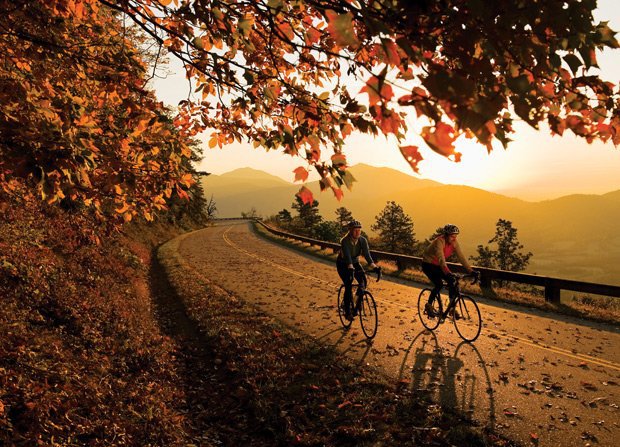
The environmental alchemy that wows tourists every fall, with spectacular leaf color in the Blue Ridge Mountains, also produces gorgeous bloom displays in the spring and summer for all to enjoy. Our state treasure is, however, being threatened from east to west by invasive plant species. A favorite native beauty, for instance—Virginia bluebells—is slowly being displaced throughout the state’s floodplains and river bottoms by garlic mustard, an extremely destructive non-native transplant that will completely overtake these areas unless concerned citizens respond.
Invasive plants not only reduce diversity and mar the scenery, but they also disrupt ecological processes. Wildlife native to Virginia is unfamiliar with non-native plants and will not use them as habitat, regardless of the generous shelter they could potentially offer. Plants and animals that have evolved together have adapted gradually to change, creating a web of life whose balance is delicate.
The seeds and fruits of invasives can be dispersed by wind, birds, hikers’ boots and automobile tires at an alarming rate. Rampant vegetative spread, high seed production and successful dispersal, germination and colonization: all are part of the process by which invasives muscle out native plants. And it is tough and expensive to control their spread.
Species considered “native” are those growing in Virginia before the arrival of the Europeans, usually set at 1607, the time of the settlement of Jamestown. According to Tom Smith, Director of the Natural Heritage program of Virginia’s Department of Conservation and Recreation, “The estimate in the U.S. for annual economic loss due to invasive species is $137 billion per year.” Natural Heritage’s focus is to protect rare plant and animal species, to manage Virginia’s Natural Area Preserve System—land other than areas within the Parks System that provides habitat for rare species. The program’s focus since the early ’90s has been the greatest threat to this habitat, invasives. Governor Tim Kaine recently signed an executive directive that created the Invasive Species Working Group, intended to develop a statewide species management plan. The group has been approved by the U.S. Fish and Wildlife Service, which means it will be eligible for limited federal funding beginning in the fall of 2007.
Citizens can help by understanding what should and should not be introduced into our environment. Infamous intruders such as kudzu are obvious, but some exotics like Oriental bittersweet might seem showy and harmless when they, in fact, are not. Kudzu, native to Japan, was thought to be ornamental when it was brought to the southeastern U.S. to use as a soil stabilizer and animal fodder. In the 1930s, the U.S. Department of Agriculture used it to revegetate areas where the soil was disturbed by construction, to control erosion on bare banks. The highway department liked its ability to grow fast in poor soil; however, its prolific nature—the ability to grow as much as a foot a day and, under ideal conditions, up to 60 feet a year—has made it a feared strangler with its own Little Shop of Horrors. Left alone, it grows into a vast canopy over a whole forest of trees and capturing all the sunlight at the top. Deprived of light, the trees and plant material underneath die. Besides seriously stifling agricultural and timber production, well-established kudzu can take up to 10 years to control, because its root system can be up to 12 feet deep.
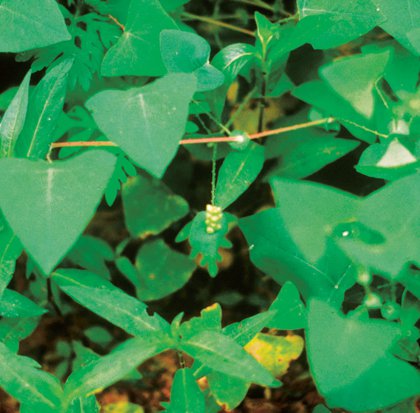
Another vine that poses a similar threat advertises its danger by its very name, mile-a-minute (Polygonum perfoliatum). And don’t be tempted by the lush foliage and sky-blue fruit of porcelain berry (Ampelopsis brevipedunculata) to let it remain in your garden, because birds spread it swiftly in their droppings, and it becomes quite difficult to remove. Grow the hybrid honeysuckle “Goldflame” (Lonicera x heckrotti) instead, or a nice clematis.
Another invader, Japanese stiltgrass, was used as a packing material for porcelain from China and was likely introduced into Virginia by seeds escaping accidentally. It showed up in Virginia only 15-20 years ago but now is spreading everywhere. In the logging industry, for example, when a company logs a forest, the skid path made by the log sliding down a hill becomes a vector for transmitting seeds. The stiltgrass already grows in ditches, but when the forest soil gets disturbed and these invasives get tracked in with a skidder, they gain a foothold in the open soil and proliferate in the forests.
The main problem is the extremely dense root mat stiltgrass produces. If an acorn falls and germinates, it cannot compete with the dense root system of the stiltgrass. Indigenous seeds can’t grow to maturity, resulting in considerably reduced germination of trees —a significant forestry problem.
Tree of heaven (Ailanthus altissima) has equally ominous characteristics. It is a deciduous tree that grows tall and spindly as it reaches for sunlight. The problem is that it crowds out natives, such as dogwood, that dovt the land around the interstate highways. Tree of heaven can produce up to 350,000 seeds in a year, its seedlings establish a taproot three months from germination, and the tree produces a toxin in its bark and leaves. As these poisons accumulate in the soil, they inhibit the growth of other plants. This toxin is so effective, it is being studied as a possible source for a natural herbicide. Smith notes that “because the tree of heaven seems here to stay, the Department of Forestry has started exploring any commercial value that might be possible. There is a bench in their office made of it. The wood is attractive, although it must be the right size and cured the right way.”
The Blue Ridge has one other major problem, this one of the six-legged variety: the hemlock woolly adelgid, an Asian insect that attacks hemlock trees. It showed up in Maymont on an imported hemlock tree, and whole stands of hemlock in the Blue Ridge are now dead. Like other invasives, the woolly is a tenacious foe. Foresters cannot spray because it lives on the underside of the leaves, so they are currently researching the idea of introducing another type of insect—a natural predator of the adelgid—into the environment. They hope to get the good bug to eat the bad bug. At the same time, researchers are conducting further studies to be sure the good bug will not eat anything else that could disrupt the ecosystem.
In wetland habitats, in the tidal marshes and basins in Eastern Virginia, the greatest invasive problem is phragmites. Losing native plants means losing the wildlife that once used that habitat—a great cause of worry, not only for people who live near the water and those who enjoy it, but also for everyone who values planet Earth’s web of life. The conservation program to spray and kill phragmites has won widespread popular appeal for several reasons. Landowners do not want the invading plants taking over their duck hunting marshes, and developers are becoming very concerned because these invasives grow very tall and are beginning to obscure expensive views. Also, they can develop thickets near a house and, because the plants die in the winter and are highly flammable, they have become a wildfire concern.
Although some citizen groups have banded together with help from their county or town park manager to actively deal with local problems, there are basic things that everyone can do. First, buy native plants grown from local stock for conservation, and landscape with these. Natives possess traits that adapt to local conditions, as well as ruggedness and resistance to drought and disease. They thrive under local conditions and so require less fertilizer and fewer pesticides. Native plants also attract a greater variety of butterflies, songbirds and other wildlife: bluestem, switch grass, Indian grass, butterfly weed, ironweed and Joe Pye weed offer good sources of nutrition. And natives such as black-eyed Susans and bee balm provide gorgeous garden color.
Second, it is important to understand that not all non-native plants are bad, and plenty of them are great for the landscape. In fact, we eat them every day. Just be aware of the non-natives that are on the invasive list (see website below), and do not plant them. If they are growing on your own property, remove them.
However, the most important things you can do are to get educated about the danger of invasives and to get people to understand the threat. Smith explains the reason this issue is such a difficult one: “Most of us look out the window and see lots of green, so we think things must be OK. It is hard for people really to get their hands around the scope of the problem.” Support legislation that restricts introduction of invasive alien plants, and get involved in organizations that work to protect biodiversity. It’s crucial that local and state agencies coordinate their efforts so that one agency is not planting what another is trying to control. Do all you can to promote an early detection plan, as the cheapest time to deal with an invasive is before it spreads to every county in the state. Your input can make a crucial difference.