
Deep winter is the best time to plan for the spring season. And what better to look forward to than an heirloom garden?

Heirloom Seeds
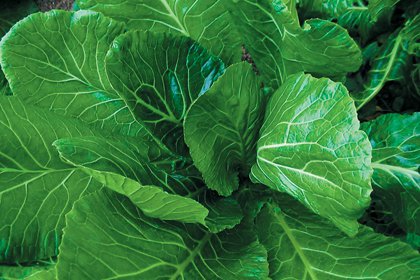
McCormack’s Green Glaze collard greens


Heirloom beans
The very name “heirloom seed” implies the value generations have placed on these treasures of the garden. They provide a living, tangible link to people, places and events of the past. Stories as colorful as the plants themselves inspire modern gardeners to dig into history where they end up reaping many important benefits: better flavor, higher nutritional value, gorgeous variety and aesthetic appearance. These plants have adapted over many years to the climate, soil and growing season of their particular areas. Seeds of antique varieties germinate more reliably than modern ones. The resulting plants are undemanding and show unusual resistance to disease and extremes of weather.
Heirlooms are non-hybrid varieties introduced before 1940. This date is important because it marks the era when companies began hybridizing corn for greater yield. The protein content of corn has been declining ever since. As opposed to modern sweet corn’s “empty calories,” heirloom dent corns such as ‘McCormack’s Blue Giant’ and ‘Hickory King’ are more filling.
Dr. Jeff McCormack, who has taught courses in plant physiology and plant ecology at Middlebury College in Vermont, the University of Virginia and Sweet Briar College, started the Virginia company Southern Exposure Seed Exchange in 1983 to bring back heirloom varieties that thrive in the hot, humid Southeast (hence, the name) and to focus on genetic preservation. His interest in heirloom plants and the stories behind those plants started with a maroon-and-white-speckled seed called Jacob’s Cattle Bean, reputed to have been developed by Jacob Trout of Virginia. At a Blue Ridge Mountain seed exchange, where food, music and seeds not commercially available were shared, McCormack was introduced to the yellow potato onion, which resembles a shallot. Thoroughly impressed with this mighty perennial multiplier, whose bulbs have outstanding keeping quality, he wrote an article on them for Organic Gardening. From his research, his seed company was born.
One day in the 1980s, a trip to buy a computer proved fortuitous for McCormack when he met a woman and began telling her about his business. She said, “You ought to talk to my husband’s grandfather.” The professor did talk with Ed Martin and his grandfather, M. C. Byles, a 1930s radiator repairman from West Virginia better known as “Radiator Charlie,” the originator of the Mortgage Lifter Tomato. McCormack taped a long interview with Martin and Byles, later featured on NPR, with Martin getting his grandfather to reminisce about the way he came up with the huge tomatoes in the 1940s. Byles crossed six generations of tomatoes, including German Johnson, Beefsteak, English and Italian varieties, to produce a hefty tomato—up to 4 pounds each. He sold the plants for $1 each, a very high price for the time. Over the next six years, that tomato enabled Byles to pay off the mortgage on his house.
Getting the story behind the odd name is fascinating, but even more remarkable are the seeds of regional culture gleaned from Byles’ ambling recollections of his 85 years: his memories of the Cherokees, his family’s expectations and their work ethic. Asked how he got started in gardening, Byles tells of how, at age 4, despite his protestations that “I’m too little to work,” his mother declared his age ripe for a necessary job and sent him into the fields to learn to pick cotton. McCormack emphasizes, “It is important to remember the culture in the word ‘agriculture’—in the process of saving the seeds, we are also saving parts of our cultural history.” And that is just what happened. By putting the Mortgage Lifter’s story in his seed catalog, McCormack has helped preserve the strain.
McCormack sold Southern Exposure Seed Exchange to Cricket Raketi, at Acorn Community, an intentional community whose business has become a 170-acre organic farm. He sees “stewardship of seed resources as a community responsibility” and still works with Southern Exposure, growing seed and lecturing on organic seed production.
When the Soviet Union started falling apart and people were going hungry, concerned citizens in Charlottesville began taking food to people in need and asked Dr. McCormack if he could send seed. He complied and was able to get some heirloom varieties in return. From Uzbekistan, he obtained Marigold Tashkent #1, a gold-and-mahogany-flowered marigold that has a sweeter foliage than the one we know. The online catalog also offers unusual herbs. Woad (Isatis tinctoria), a dye plant that was made into a blue paste and painted on the skin by warriors of the Anglo-Saxon period (think Braveheart), is available in seed form. Cotton seed ‘Erlene’s Green’ is a rare heirloom from Texas, with a natural pastel green color to the cotton fiber. The culinary heirloom ‘Breadseed Poppy’ is available for those interested in growing their own poppy seed for baking breads and cakes. There are many varieties of garlic, offering nuances of flavor to tempt the most sophisticated palates and satisfy demand among the restaurant trade. The ‘Green Zebra’ tomato has vertical, irregular stripes of green and yellow, making a smashing presentation on a plate. The catalog also sometimes carries seeds of hard-to-find old-fashioned shrubs such as Calycanthus (commonly called ‘Sweet Betsy’ or ‘Sweet Shrub’), whose delicious fruit fragrance permeates the entire landscape.
Collecting and disseminating seeds has been considered highly important in Virginia at least since the days when Thomas Jefferson used his 1,000-foot-long kitchen garden, terraced into the hillside of his “Little Mountain,” as an experimental laboratory to cultivate 70 different species and 250 varieties of vegetables. His letters brim with enthusiasm about acquiring distinctive seeds, especially when anticipating the return of Lewis and Clark from their Voyage of Discovery. Today, the Thomas Jefferson Center for Historic Plants ensures the continuance of Jefferson’s mission by offering such charming varieties as the popular tennis ball lettuce (a parent of modern Boston lettuces) and the Prince Albert pea. Family lore records Jefferson’s playful “pea contests,” where he competed with local gentlemen farmers for bragging rights to produce the area’s first dish of peas in the spring, with the winner hosting a community feast featuring the savory champion produce. Visitors can purchase seeds collected by Monticello gardeners and experience this connection to our past. Sampler packs offers various varieties in a gift set. Seminars are available on seed saving, vegetable gardening and wildflowers.
More at Monticello.org/chp , SeedSavers.org .